De la disposition des meubles à l’échelle, nous partageons des idées de design moderne pour créer une salle de séjour moderne, élégante et fonctionnelle.
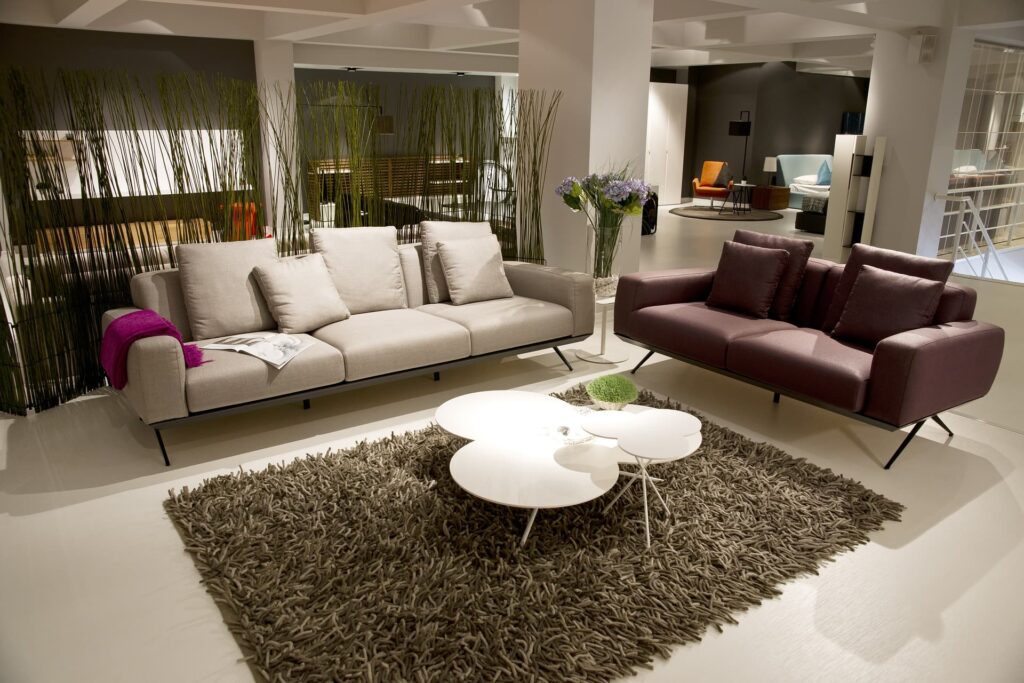
Mobilier et éclairage de salon moderne.
Aujourd’hui, la grande pièce est le cœur battant de la maison moderne. Cet espace de vie ouvert, typiquement relié à la cuisine et contenant à la fois des meubles de salle à manger et de salon modernes, est l’endroit où la famille et les amis se réunissent, dînent, font leurs devoirs et se divertissent. Bien sûr, meubler et décorer un espace ouvert et varié peut être un défi. Pour nous conseiller sur les grandes idées d’aménagement de salons modernes, nous nous sommes tournés vers le cabinet d’architecture d’intérieur Studio Gild, basé à Chicago, et ses fondateurs. Bon nombre des projets actuels du cabinet intègrent des « espaces ouverts spectaculaires avec des zones combinées cuisine/salon/salle à manger/chambre à coucher« . « Ces aménagements fonctionnent bien dans une grande variété de maisons, de styles et d’emplacements géographiques ».
YL : Quels sont vos meilleurs conseils pour la décoration d’un salon moderne ?
SG : Il est important de délimiter une grande pièce et il ne s’agit pas simplement de rassembler différents agencements de sièges. Nous aimons utiliser des tapis de grande surface qui suivent le périmètre de l’espace pour aider à adoucir et à unifier une pièce surdimensionnée. Nous aimons également superposer des tapis plus petits afin de mieux délimiter des zones distinctes. Une banquette intégrée peut ancrer une niche et la séparer du salon. La création d’une zone centrale avec une cheminée ou un téléviseur permet d’orienter la disposition des sièges principaux, et le fait de faire face à une partie des sièges vers la cuisine permet de faire en sorte que ces deux zones se parlent.
Tapis de salon bleu, point focal.
Mini tapis de sol en vannerie de Chilewich
YL : Quelles pièces conviennent aux grandes pièces, comme les sections et les grandes tables basses ?
SG : Pour créer une échelle appropriée dans ce genre d’espace et éviter de donner l’impression d’avoir des sièges de la taille d’un timbre-poste, il faut un mobilier plus grand. Un canapé ou une table basse peuvent servir de séparateur de pièces, indiquant où se termine la cuisine et où commence le salon. Le canapé sectionnel LRG est une excellente pièce pour cette raison et il est à la fois confortable et beau sous tous les angles, ce qui est important dans un espace ouvert où le mobilier peut être vu de plusieurs directions.
Les canapés extra-longs, comme le canapé trois places Place, conviennent également bien aux grandes pièces. Je l’associerais à la table basse Eyre, qui a une présence tout aussi forte et qui peut servir de base à la zone des sièges. La table basse Carlisle est assez grande, mais sa base en forme de cage lui donne une impression de légèreté et d’aération. Il est toujours bon d’équilibrer un mobilier visuellement lourd avec des pièces plus organiques et à la structure ouverte.
Canapé sectionnel moderne, gris clair
Canapé sectionnel LRG de ARTLESS
YL : Une grande pièce contient souvent des espaces pour vivre et manger. Pouvez-vous nous donner des conseils pour trouver des tables à manger et des canapés qui se marient bien avec un ensemble de mobilier de salon moderne ?
SG : Choisissez-en un qui sera la pièce de déclaration. Si c’est le canapé, que la table à manger soit subtile. Et gardez à l’esprit que la subtilité peut toujours être spectaculaire, mais pas trop compétitive. Les chaises de salle à manger peuvent aussi être une déclaration, mais les deux plus grandes pièces ne doivent pas se battre pour occuper le devant de la scène. Souvent, une table console derrière le canapé peut servir de buffet et créer la barrière nécessaire pour définir chaque espace et donner au canapé et aux chaises à manger un peu d’espace pour respirer. La table à manger Saarinen est toujours un excellent choix pour les espaces ouverts, car elle peut avoir un aspect à la fois formel et décontracté et fait le pont entre le mobilier moderne et traditionnel. Son plateau rond et sa base en tulipe fine lui permettent de se transformer facilement en banquette ou en banc d’angle.
Table à manger ronde moderne en marbre.
Table à manger ronde Saarinen de Knoll
YL : Quelles sont les pièces de rangement que vous aimez dans une grande pièce ?
SG : L’étagère de phase est idéale pour exposer des accessoires ainsi que pour ranger des livres. Elle conviendrait parfaitement à une étagère moderne flanquée de chaque côté d’une cheminée. L’ajout d’une grande bibliothèque dans une pièce ouverte permet de créer un espace central et, comme les œuvres d’art, ajoute une couche d’intérêt visuel aux murs. L’étagère 3X avec socle de la série LAX est une belle crédence sur laquelle on peut placer un téléviseur ou sous un téléviseur mural. Elle permet de dissimuler facilement un équipement audiovisuel tout en exposant des livres ou des objets.
Des étagères de rangement modernes, grises et bleues.
Étagère Margo de BDI
YL : Quelles sont les idées de places assises pour faciliter le divertissement ?
SG : Nous plaçons souvent des bancs uniques dans la disposition des places afin de pouvoir les déplacer pour obtenir des places supplémentaires lors d’une fête. De plus, avec les banquettes, nous aimons faire courir le banc bien au-delà de la table pour qu’il y ait un endroit où se percher sans avoir l’impression de devoir s’asseoir à la table. Nous aimons beaucoup le Platte Bench d’Alice Tacheny.
Des bancs modernes en bois.
YL : Les espaces de vie ouverts sont souvent assez modernes, mais qu’en est-il si vous avez une maison plus traditionnelle ?
SG : Les espaces de vie modernes et ouverts sont généralement dotés de sièges surdimensionnés, tels que des banquettes sectionnelles, qui favorisent une atmosphère sociale et décontractée pour se détendre et se divertir. Les cadres plus traditionnels comportent un plus grand nombre de petits groupes de sièges, mais les vignettes intimes peuvent tout aussi bien servir à divertir tout en favorisant de multiples zones de conversation. Pour ce look, choisissez des pièces surdimensionnées à l’échelle humaine, comme la chaise longue Moooi Smoke Lounge Chair.
Chaise longue moderne et confortable.
Fauteuil Bart de Moooi
YL : Qu’en est-il de l’éclairage des salons modernes ?
SG : Nous aimons les grands luminaires frappants qui permettent de rassembler plusieurs zones en un seul geste cohérent. Il est également important d’intégrer un éclairage de travail bien planifié, afin de s’assurer que la forme et la fonction sont traitées de manière égale.